
Flat walls, sharp corners, no shadows · All 32 London boroughs
Plastering in London
Skimming, float and set, rendering, dry lining and decorative plasterwork.
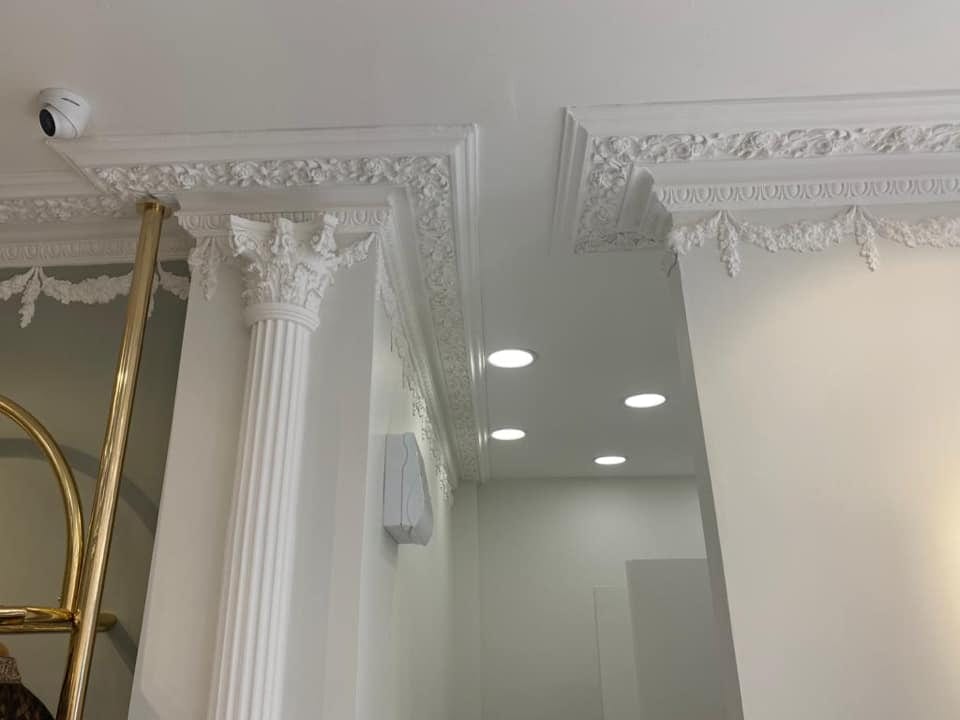
Decorative plasterwork
Decorative cornice and Corinthian column plasterwork with recessed lightingWhat we do
Plastering is the finish everything else is judged against — bad plaster shows under every light in the room. We skim over existing, float and set onto brick, dry line and render externally, and we make good around new openings so the join never announces itself.
Included as standard
- Skimming over existing plaster and plasterboard
- Float and set onto brick and block
- Dry lining and stud partitions
- External rendering and pebbledash repair
- Coving, cornice and decorative plasterwork
- Making good after electrics and plumbing first fix
- Typical timescale
- 1–5 days per room
- Coverage
- 32 boroughs
- Payment
- In arrears
- Trading since
- 2008
Backgrounds, drying and what goes wrong
Plaster fails for reasons decided before the first coat goes on: the wrong background preparation, no bonding agent where one was needed, or plastering onto a wall still carrying construction moisture.
New plaster has to dry before it is decorated — typically several weeks on a freshly plastered wall, and longer through winter. Painting too early traps moisture behind the film and the finish flakes. We programme decoration around that rather than pretending it does not apply.
Flatness is judged by the light in the room, not by a spirit level. Where a wall runs alongside a window or under a run of downlights, every imperfection is raked by light, so those walls get the extra attention rather than the same attention.
The limits above are the national permitted-development rules for England. Your borough may restrict them further through a conservation area or an Article 4 direction — we confirm the position for your address in writing before quoting.
Our work
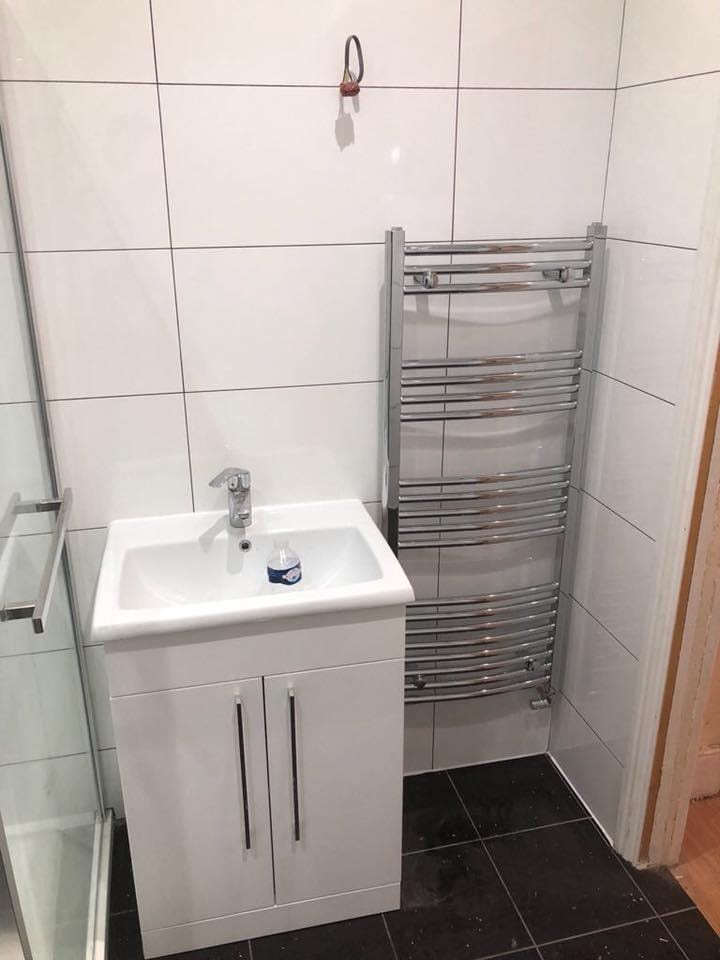
Plastering we have completed
Answers
Plastering — common questions
Do I need planning permission for plastering in London?
It depends on the property type and what is proposed. Many single-storey rear extensions and loft conversions fall under permitted development, but those rights do not apply to flats and are restricted in conservation areas or where an Article 4 direction applies. We check the planning position for your specific address before quoting, and tell you in writing which route applies.
How do you price the work?
From a site survey, written up as a fixed and itemised scope before any deposit is discussed. If something genuinely unforeseen appears once work is opened up, it is priced and agreed in writing before we continue — never added to the final invoice after the fact.
When do I pay?
In arrears of work completed. You pay for work that has been done and inspected, not for work that has been promised. This has been how the company operates since 2008.
Do you handle Party Wall notices?
Yes, where the work requires them. Under the Party Wall etc. Act 1996, notifiable work on a shared wall needs 2 months written notice to the adjoining owner, while excavation near a neighbouring structure and building at the line of junction need 1 month. We serve the notices and manage the award process as part of the job.
Will I get certificates at the end?
Yes. Electrical work is tested and certificated under Part P, and building control issues a completion certificate where an application was required. You receive the handover pack — it is what a buyer's solicitor will ask for when you eventually sell.
How long will it take?
It depends entirely on scope, and we give a programme with the written quote rather than a guess on the phone. What we will not do is start a job we cannot resource, which is the usual reason a build stalls halfway through.
By area
Plastering across London
Also from us
Related trades
Looking for something else? See all 19 services or browse by borough.
Skip the forms
Get a price for your plastering
A picture and a postcode tells us more than any enquiry form. You will get a straight answer about cost and whether it needs planning permission.